When most people hire an architect, they think the job ends once the drawings are done. Design? Check. Permit drawings? Check. Hand everything off to the contractor and that's it, right?
Wrong.
What most clients don't realize is that architects provide a critical service during construction itself—it's called Construction Administration, or CA for short. And if you're skipping it to save a few bucks, you're making a costly mistake.
What Is Construction Administration?
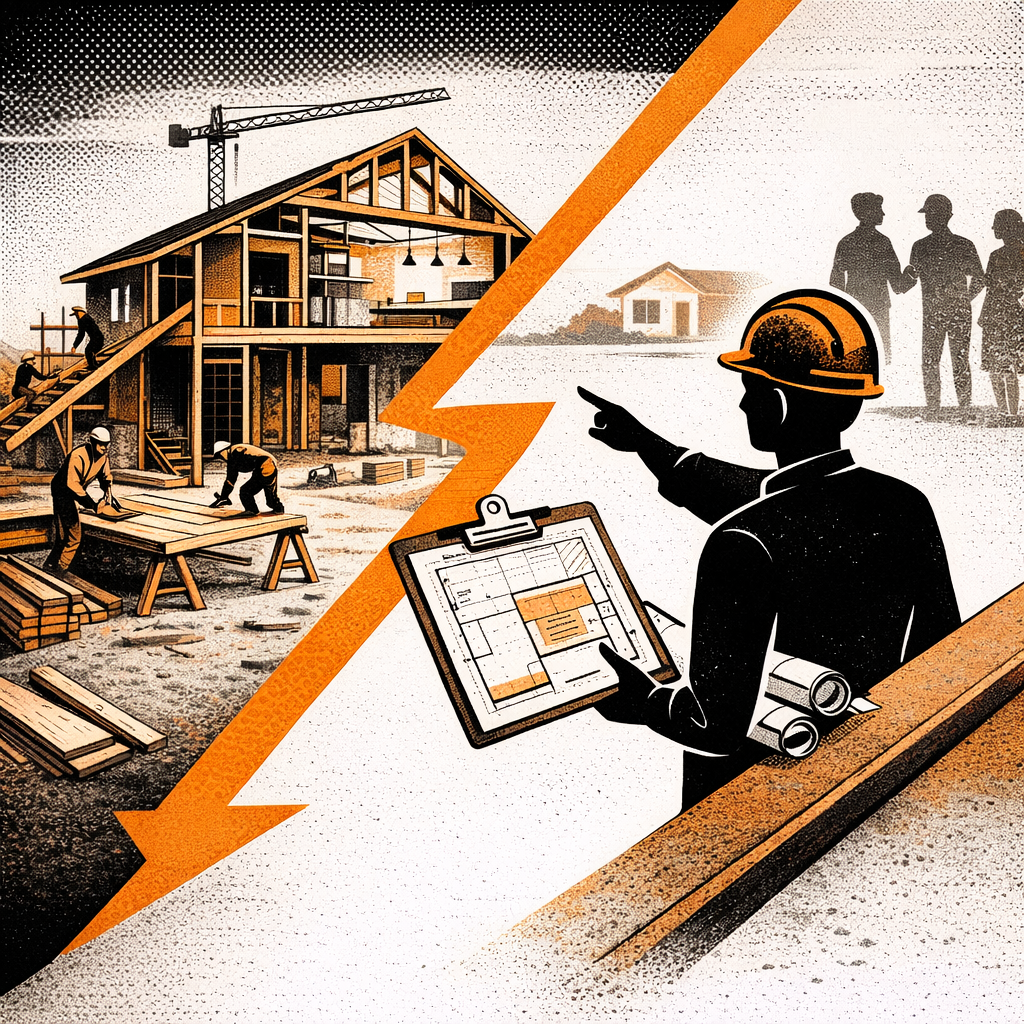
Construction Administration is the service architects provide from the moment construction starts until the day you move in with your certificate of occupancy in hand. The purpose is simple: to make sure the vision we created together during design actually gets built the way it was intended.
I'm not there to supervise the contractor—that's not my role. The contractor and their subs are professionals who know how to build. My job is to act as an advocate for you and for the project, making sure the design intent gets executed correctly.
Think about it this way: buildings are incredibly complex. Even the most thorough construction documents can't capture everything. There's nuance, sensibility, and design thinking that doesn't translate to technical drawings. That's where I come in during construction—to bridge the gap between what's on paper and what needs to happen in reality.
What I Actually Do During CA
Site Visits
I visit the job site regularly—weekly or biweekly depending on the phase of construction. These visits aren't just reactive (showing up when there's a problem). They're proactive. I'm there to catch mistakes before they compound, answer questions in real time, and make sure things are tracking correctly.
For example, I once caught a window that was framed incorrectly. The header was sitting directly on the window with no stud support—a structural issue that would've caused serious problems down the line. We caught it during framing, fixed it immediately, and avoided what could've been a disaster after drywall and finishes were installed.
Responding to RFIs (Requests for Information)
Contractors submit RFIs when they have questions about the drawings or need clarification. These need to be answered quickly—usually within two to three days—because delays can impact the entire project schedule. If you don't have an architect handling these, guess who's fielding technical construction questions? You. And unless you speak fluent construction, that's not a position you want to be in.
Reviewing Shop Drawings and Submittals
Before anything gets fabricated—windows, millwork, cabinetry—the manufacturer produces shop drawings. These are the final technical documents that show exactly how something will be built. My job is to review them for design conformance. I'm making sure the windows you specified actually match what's being ordered, that the custom millwork aligns with our design intent, and that nothing gets lost in translation.
Managing Design Adjustments
Here's the thing people don't understand: design continues throughout construction. It has to. When you open up walls in a remodel, you discover things. Even in new construction, unexpected conditions arise. I'm there to make small design adjustments that keep the project moving without compromising the vision. Some changes I can handle directly with the contractor. Others—anything that impacts budget, schedule, or scope—need your approval. But you're not fielding every single question. I'm filtering what matters and what doesn't.
Pay Applications and Change Orders
I review the contractor's pay applications to make sure the work they're billing for has actually been completed. I also vet change orders—changes to scope, schedule, or budget. Sometimes contractors submit change orders for things that were already in the construction documents. If you don't have an architect reviewing these, you might end up paying twice for the same work.
Punch List and Final Review
At the end of construction, I walk the nearly-complete project with blue tape in hand, marking every defect, misalignment, scratch, or unfinished detail. This is your last chance to get everything corrected before the contractor moves on to the next job. Don't pay the final invoice until the punch list is complete. Trust me on this.
Why You Can't Skip CA
I get it. Construction is when all the money is being spent. The bank account is draining. It's stressful. And it's tempting to think, "Well, I've already paid for the design and the drawings—can't I just save money by cutting out the architect now?"
Here's why that's a bad idea:
1. You don't speak construction.
Even if you're organized, successful, and great at managing projects in your own field, you don't have the technical knowledge to problem-solve construction issues. When the contractor asks you a question about structural details, material substitutions, or how to handle an unexpected condition, what are you going to say? You need someone who understands both the design vision and the technical realities of building.
2. Mistakes caught early save money.
That incorrectly framed window I mentioned earlier? If we hadn't caught it during framing, it would've been framed, drywalled, finished, and then failed structurally a year later. The cost to fix it at that point would've been astronomical. Proactive site visits prevent expensive problems.
3. You'll end up paying more without CA.
Whether it's a material swap you didn't catch, a change order you shouldn't have approved, or a mistake that needs to be torn out and rebuilt, skipping CA costs you more in the long run. The fee you pay an architect for CA is a fraction of the overall construction budget—and the value you get in return far exceeds that cost.
4. The contractor needs the architect too.
Good contractors don't want to work on projects without an architect doing CA. They don't want to be making design decisions. They don't want to be fielding questions from clients about aesthetics and design intent. They want to build. And they want someone who understands the vision to be there when inevitable questions arise.
Red Flags to Watch For
If an architect tells you they're willing to do a project without providing CA, that's a red flag. It means they don't care about the final product. And here's the thing: if an architect isn't planning to be there during construction, I can guarantee their construction documents aren't as thorough as they should be. Why would they invest the time to produce meticulous drawings if they're not going to be there to see them through?
The same goes for contractors. If a contractor says they're totally fine building without an architect providing oversight, be very cautious. That tells you they're either inexperienced or they're planning to cut corners.
The Bottom Line
Construction Administration isn't optional—at least not if you care about the quality of the final product. It's the phase where your vision becomes reality. It's where all the design thinking, all the careful planning, all the decisions you made during the design process get executed.
I don't provide CA because I want more billable hours. I provide it because I care about seeing the project through. I've spent months (sometimes years) working with you to design something meaningful. I'm not going to hand off the drawings and hope for the best.
If you're embarking on a construction project, find an architect who takes CA seriously. Find a contractor who values having an architect on the team. And don't try to save money by cutting corners on oversight. It never works out the way you think it will.
Your project deserves better than that.