You know you want to remodel. Maybe you need a new kitchen. Maybe the bathrooms feel outdated. Maybe the whole floor plan just doesn't work anymore.
But before you call an architect or start gathering bids from contractors, there's one critical thing you need to figure out: the difference between your wish list and your vision.
Most people confuse the two—and that confusion leads to projects that miss the mark, cost more than they should, or fail to deliver the transformation they were hoping for.
Here's how to get clear on what you actually need before you spend a dollar.
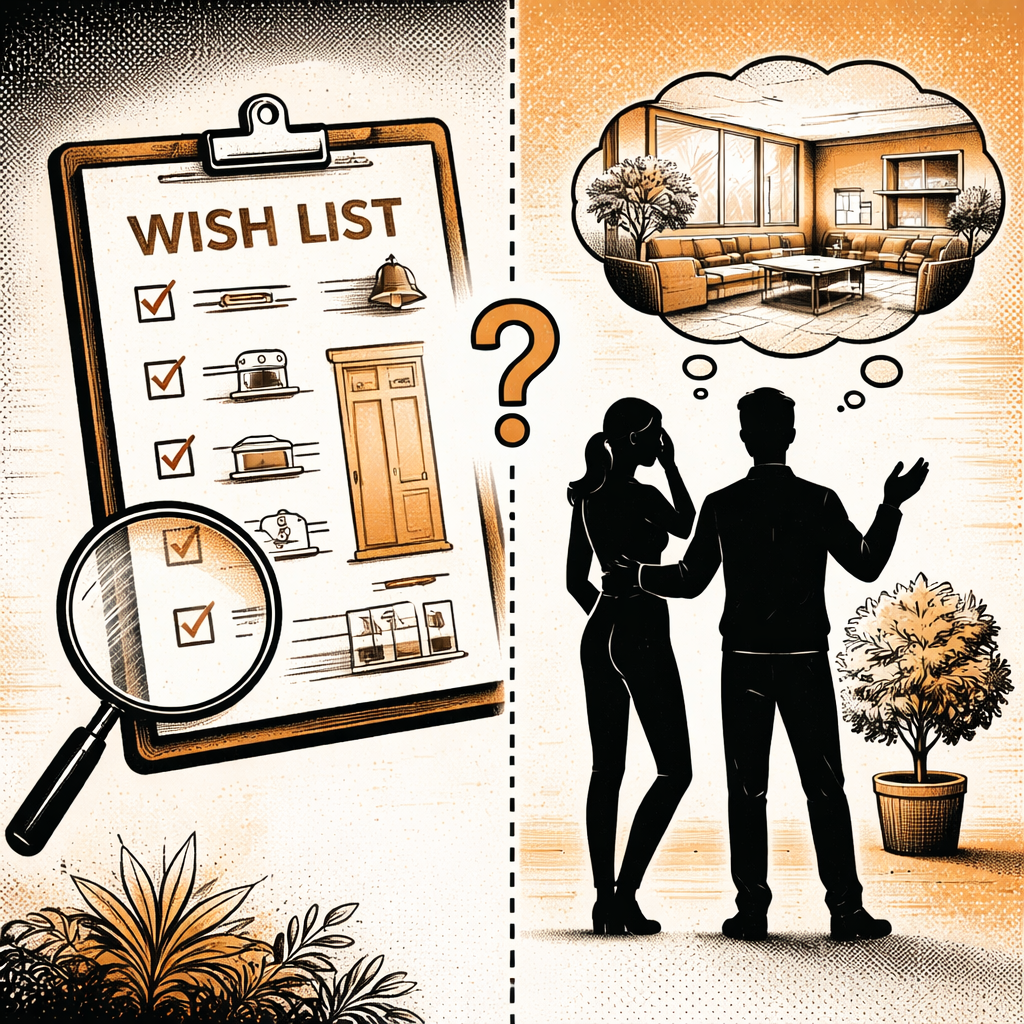
The Difference Between Scope and Vision
When I meet with clients for the first time, they usually fall into one of three categories.
Category 1: The Hyper-Specific Client
These folks know exactly what they want. They've lived in the house for years. They've thought about every detail. They have a list: new kitchen, updated bathrooms, tear down this wall, add more windows, replace the doors, new light fixtures. The list is long and specific.
This isn't a bad thing. In fact, it's a great starting point. But here's the catch: just because you know what you want doesn't mean you've thought through why you want it—or whether those things will actually solve the underlying problem.
Category 2: The Blank Slate Client
On the other end of the spectrum, I meet clients who know something needs to change, but they don't know what. They just know the house doesn't feel right. A room feels off. The flow is awkward. The light isn't good. They can't articulate exactly what's wrong—they just know it's not working.
That's completely fine. That's what I'm here for. My job is to help you figure out what moves will actually improve your home.
Category 3: Somewhere in Between
Most people fall somewhere in the middle. They have some ideas, but the ideas are often too small or too scattered to create a cohesive transformation. They want new interior doors, updated window treatments, maybe a fresh coat of paint. And while those things might help, they're not going to fundamentally change how the house feels or functions.
No matter which category you fall into, the work is the same: we need to distinguish between the "what" (your scope) and the "why" (your vision).
What vs. Why
Everyone has a list of what they want. I want X, Y, Z. I want A, B, C, D.
But what's often missing is the why. What's the larger purpose of this remodel? What do you want the house to give you in the end? How do you want it to make you feel? What does your ideal daily life look like in this space?
As an architect, I need both. I need to understand your wish list and your vision so I can see where they're misaligned and what gaps exist.
Sometimes your scope needs to expand. Sometimes it needs to shrink. And sometimes—most of the time, actually—it needs to shift entirely.
The Five-Bedroom Question
Here's a real example.
I had clients who came to me wanting five bedrooms in their remodeled and extended home. Seemed reasonable on the surface. But I had a question:
Why do you need five bedrooms?
By the time construction would be finished, their kids would have moved out. They were planning for this to be their forever home—their retirement home. Which meant they'd end up with four empty bedrooms most of the time.
So I asked: Don't you think we could recapture that square footage and use it for spaces that are more meaningful to you in your daily life once you retire?
It wasn't that five bedrooms was wrong. It was that five bedrooms didn't fit their lifestyle at this phase of their life.
We ended up keeping the same number of rooms, but we designed them so they could be staged as bedrooms in the future if they ever chose to sell. In the meantime, those spaces functioned as an art studio, a home gym, a creative workspace—things they'd actually use every day.
That's the difference between a generic wish list and a personalized vision.
Question Your Assumptions
Society formats us all to think the same way. Bigger is better. More bedrooms equals more value. Open concept is the only way to go.
But those assumptions aren't personal. They don't account for your life, your habits, your needs.
If you have three kids, yeah, you probably need five bedrooms. If it's just the two of you approaching retirement? You probably don't.
So before you commit to a scope, question your assumptions:
Why do I want this?
Will this actually improve my daily life?
Am I designing for how I want others to perceive my home, or for how I actually want to live in it?
Does this fit the chapter of life I'm in right now—and the next chapter I'm heading into?
Why Chapter of Life Matters
Remodels typically happen for one of three reasons:
You just bought the house. It doesn't fit who you are yet, so you want to make it yours.
You've been in the house for 20+ years. It's outdated. You're tired of it. You want fresh air and a new beginning.
You're planning for the next phase of your life. Maybe you're downsizing. Maybe your parents are moving in. Maybe your kids are leaving and you're reconfiguring the home to fit your new reality.
Each of these scenarios requires a different approach. And understanding which chapter you're in helps clarify what the remodel should actually accomplish.
The Recipe Analogy
Think about it like cooking.
If you're a baker and you want to create a dessert, you start by deciding what kind of dessert you want. Sweet? Delicate? Notes of chocolate and orange? Once you know the outcome, you can work backward and choose the right ingredients.
But a lot of people approach remodels like this: "I'm making a dessert. My ingredients are chicken, pork, salt, and pepper."
Uh… that's not going to work.
You can't decide on ingredients before you know what you're trying to create. You have to start with the vision—the outcome—and then choose the scope (the ingredients) that will get you there.
The Best Clients
The clients I love working with most are the ones who have a vision—or at least a vague sense of one—but they don't know how to get there.
They know how they want the house to feel. They know what's not working. But they're open to hearing ideas about how to solve it. They're not married to their wish list. They're married to the outcome.
If you come to me with that mindset, we're going to do great work together.
Start Here
Before you hire anyone—before you spend a dollar—get clear on this:
What do I want my home to give me? How do I want it to make me feel? What does my ideal daily life look like in this space?
Once you can answer those questions, the scope will become much clearer. And you'll avoid the trap of spending a bunch of money on a list of things that don't actually solve the problem.
Your remodel should be personal. It should fit your life. It should transform how you live—not just how your house looks.
Start with the vision. The scope will follow.