If you think a remodel is just a smaller, simpler version of new construction, you're in for a rude awakening.
Remodels are a completely different beast. They come with unique challenges that new builds simply don't have. And the root of all those challenges is this: you're working with an existing structure, and none of us—not me, not the contractor, not you—know exactly what's inside those walls until we start tearing them apart.
Here's what makes remodels so much harder than new construction, and why you need to prepare yourself mentally and financially for what's coming.
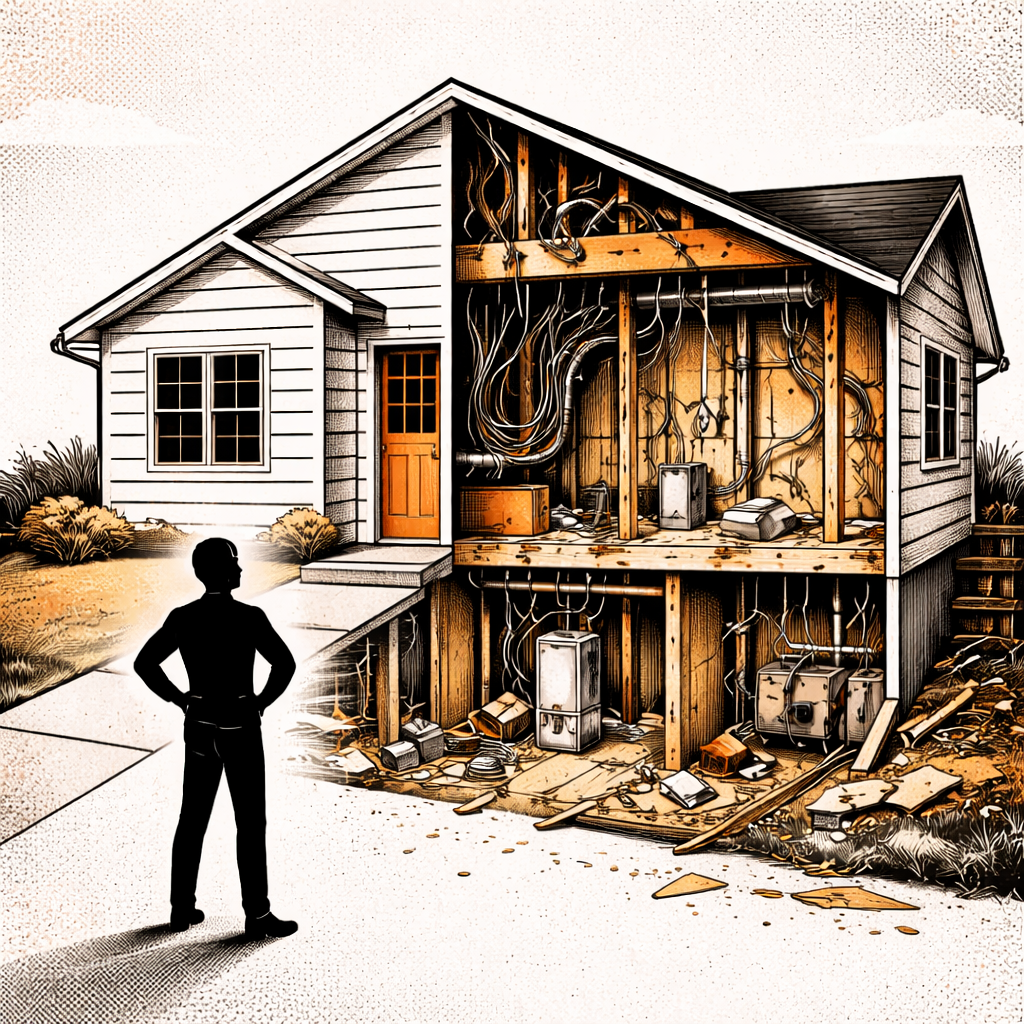
You Don't Know What You Bought Until You Open It Up
Here's the uncomfortable truth about buying a house: you don't actually know what it's made of until you start taking it apart.
Sure, you had an inspection. The inspector poked around, checked the roof, tested the outlets, looked for water damage. But an inspection only tells you so much. It doesn't tell you what's behind the drywall. It doesn't tell you if the electrical is up to code. It doesn't tell you if the framing was done correctly or if there's hidden structural damage.
You only find that out when you start demolition. And by then, there's no refund policy.
I've seen this play out more times than I can count. Heated floor systems that were advertised in the real estate listing turn out to be cheap plastic hoses thrown between floor joists with no insulation. Load-bearing walls that were removed improperly years ago. Plumbing that doesn't meet code. Electrical wiring that's a fire hazard.
These aren't edge cases. This is normal for remodels.
And when you're buying a house for hundreds of thousands or millions of dollars, finding out that major systems are broken or improperly installed after the fact? Yeah. That's infuriating. And expensive.
The Surgery Analogy
I like to think of remodels like surgery.
You can do all the planning you want. You can do X-rays, exams, consultations, pre-op visits. You can plan for D-Day down to the minute. But once the surgeon opens you up, they're going to see things they didn't—and couldn't—see before.
And when that happens, they have to improvise. They have to make decisions on the spot. Things are going to change based on what's actually inside.
The same is true for remodels. No matter how thorough the planning, once we start opening walls and floors, we're going to find surprises. Some will be minor. Some will be expensive. Some will require us to completely rethink the approach.
That's just the nature of working with an existing structure.
Bad Surprises Are the Norm
Let me be clear: you should expect bad surprises.
I tell every client this upfront. When we get to construction, there will be surprises. There might be a few good ones. But there will almost certainly be ones that make the project more challenging, more expensive, or both.
This isn't pessimism. It's realism.
On one project, we opened up walls and floors for a pretty extensive interior gut remodel. The homeowner had bought the place based on the listing, which advertised a state-of-the-art heated floor system.
Turns out, the "system" was just a bunch of plastic hoses thrown between the floor joists. No insulation. No proper installation. The system was garbage.
Now the homeowner is on the hook for fixing it. That's an additional cost that wasn't in the original budget. And it's a cost they wouldn't have known about until we started tearing things apart.
That's why you need a contingency budget.
Budget for the Unexpected
When you're budgeting for a remodel, you can't just budget for the new stuff you're adding. You also have to budget for the old stuff you're going to have to fix once you open things up.
Here's how I tell clients to think about it:
Your budget has two parts:
The ideal number — what you can comfortably afford for the project.
The contingency — 10-20% of that ideal number set aside for unexpected issues.
Part of your budget goes toward the new things you're building. Part of it goes toward fixing the problems you're going to uncover.
If you don't build in that cushion, you're going to be caught off guard when we find issues. And trust me—we're going to find issues.
Why This Doesn't Happen with New Construction
With new construction, you're starting from scratch. You control everything. You know exactly what materials are being used. You know the structure is being built to code because you're overseeing it from day one.
There are no hidden surprises behind the walls because there are no walls yet.
That's not to say new construction doesn't have its own challenges—it absolutely does. But the challenges are different. With new construction, the unknowns are mostly related to site conditions, permitting delays, or material lead times.
With remodels, the unknowns are inside the house itself. And you can't know what they are until you start opening things up.
The Chaos of Framing
One of the most exciting—and most confusing—phases of a remodel is framing.
When you're on site during framing, it's chaos. There's open sky. There's wood and plywood everywhere. Studs are going up. Things are getting framed out. It's beautiful in its own way, but it's also overwhelming.
And here's the thing: it's really hard to look at all that chaos and understand whether or not it's correct.
Only someone who understands framing and understands the drawings and understands the project intimately can walk through that maze and say, "Wait—this wall is off. This dimension doesn't match the drawings. This window wasn't framed correctly."
I've caught mistakes during framing that would have been catastrophic if they hadn't been fixed. Windows framed wrong. Walls in the wrong location. Structural elements missing.
If I hadn't been there to catch those mistakes, they would have been drywalled over, finished, and then caused serious problems down the line.
That's why you need an architect doing construction administration during a remodel. Because the contractor—even a good one—can miss things. And you as the homeowner definitely don't have the expertise to catch them.
Why Remodels Require Flexibility
Here's the mindset you need going into a remodel:
Things are going to change. Be ready to adapt.
I'm not saying you shouldn't plan. You absolutely should. We're going to spend months planning every detail. But once construction starts, you have to be mentally prepared for the plan to shift.
We might open a wall and find a drainage pipe running exactly where we wanted to put a medicine cabinet. Okay—no medicine cabinet. We'll come up with another solution.
We might discover that a beam we thought we could remove is actually load-bearing and removing it would require a massive structural intervention that blows the budget. Okay—we adjust the design to work around it.
This is part of the game. And the clients who do best with remodels are the ones who understand that going in.
The Bottom Line
Remodels are harder than new construction. They require more problem-solving. They require more flexibility. They require more tolerance for uncertainty.
But they're also incredibly rewarding. There's something deeply satisfying about taking a house that doesn't work and transforming it into something that fits your life perfectly.
Just go in with your eyes open. Expect surprises. Budget for them. And be ready to adapt when they show up.
Because they will.