When I tell my family or friends I'm an architect, they don't really understand what that means. They think I design buildings….snap my fingers and pull something out of a magic bag. But architecture is so much more than that. The profession involves tasks and responsibilities most people would never imagine. So let me walk you through what I actually do.
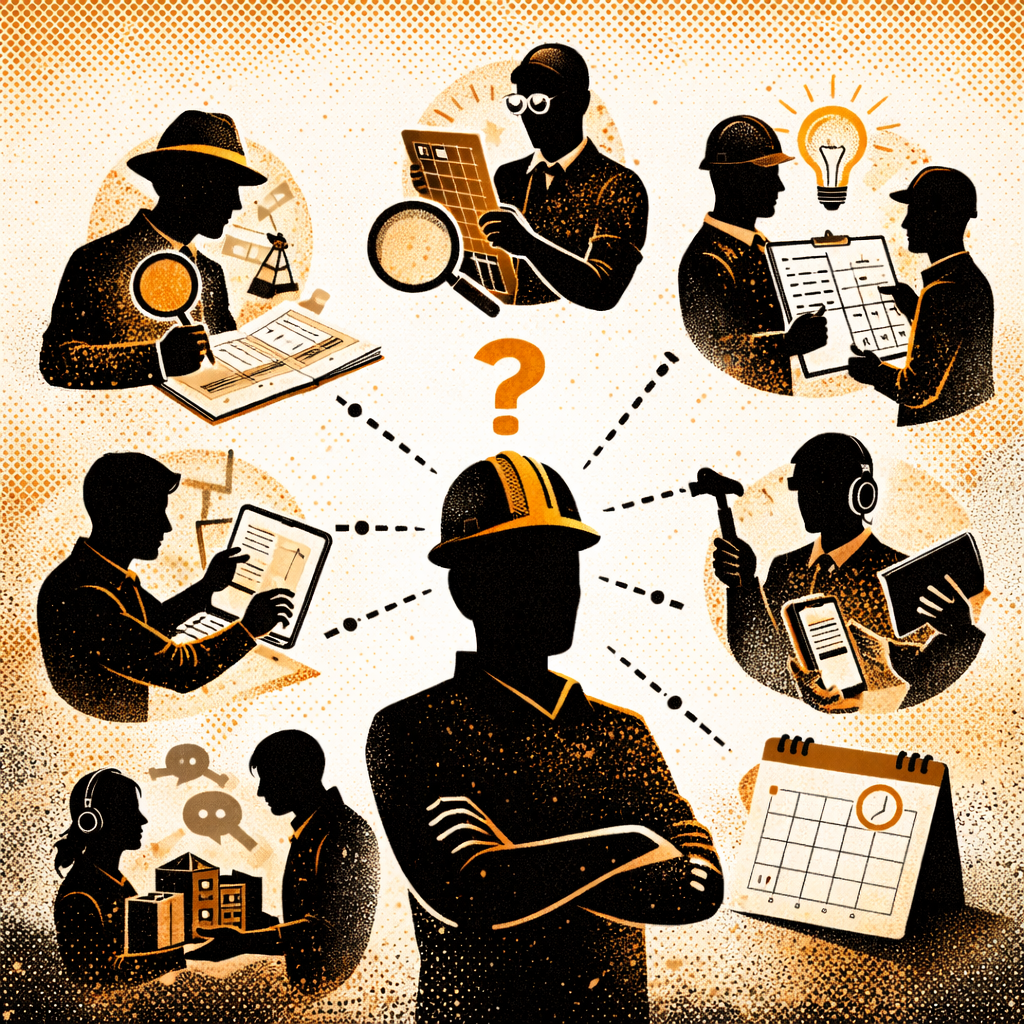
I'm a Researcher and Detective
Before I design anything, I put on my detective hat. I ask a ton of questions. I look at maps of the site, study the climate, understand the neighbors, examine the views. I dig into my client's needs, their budget, their schedule.
A client might come to me and say, "I need three bedrooms." But I need to understand why. Because that why gets to the root of the whole thing. Maybe what they actually need is something entirely different—and better.
I also mine for information that isn't on the surface. Sometimes clients don't even know what they truly want until I help them uncover it. It's almost like being a therapist. There's a confidant role happening here. I'm not just gathering data, I'm understanding people.
And then I organize all that information. I provide structure and hierarchy to it. I figure out what's most important, what can be integrated, what conflicts need to be resolved.
This is detective work. And it happens before I ever draw a single line.
I Question Everything (Pre-Design)
Once I have all that information, I start questioning the assumptions.
A client might say they need three bedrooms. But should it be three? Or two and a half? Should we reconsider the relationship between spaces entirely?
I'm looking at the information with design glasses on now. I'm considering how all of this will translate into an actual building. This is where I start testing ideas, exploring options, and making sure I'm not just accepting the brief at face value.
Most clients want to rush past this phase because they're excited to see design. But this is where the foundation gets set. If I skip this, I'm designing blind.
I Generate Ideas (Ideation)
Now comes the part people actually think of when they think "architect": I come up with the big idea.
What's the concept behind this building? What's the vision?
But it's not just one eureka moment. I generate ideas—big and small. I go back and forth between them. I try different things. It's a think tank. I'm taking all the information, all the design knowledge, and asking: what can I do? How can I do it?
And then I put those ideas down on paper so they can become a conversation. Ideas are like ping-pong balls, I bounce them back and forth with the client. We see how they react. Some die in the corner. Some come back stronger.
This is where I'm also critiquing constantly. I have to be opinionated, but I also have to be objective. I can't fall so in love with my own idea that I can't see its flaws. That's the difference between an artist and an architect, I have a responsibility to other people.
I'm a Listener and Translator
Design is a conversation. I throw an idea at the client, and I watch how they respond. I listen, really listen, because there are layers to why someone says something.
They might have an aversion to something because of their childhood. Or because of another person on their team. Or because they don't have the language to express what they actually want.
I'm designing for strangers. I only have a limited amount of time to get to know them deeply enough to create something that will mean a lot to their daily life. It's like speed dating with a very expensive outcome.
And it requires people skills. Being a good listener. Being a good communicator. Sometimes even becoming a friend.
That human exchange is crucial to the creative process. It's something people don't think about when they think "architect."
I Become a Problem Solver
Once we move into schematic design and design development, things get real. I'm drawing where walls will go, how big rooms will be, what size the doors and windows are.
This is where I'm solving problems. How does this door work if there's a cabinet right there? How do we hide the garage from this view? The client just changed something, how do I integrate it without breaking everything else?
Design is like a stew. You have to cook it slowly. If you rush it, you miss things. You don't notice that the door swings into the handle of the adjacent cabinet. You don't catch the awkward spatial relationship that will bother you every day once you move in.
There might be 30 different ways to solve any given problem. My job is to find the best one that meets all the criteria.
I'm an Event Planner (Kind of)
During schematic design and design development, I also become something like an event planner.
Things are getting defined. I need to sequence everything. What needs to happen when? Today we're looking at the kitchen. Tomorrow, the bathroom. In a month, we'll pick furniture.
I have this overall map of the project in my head. I understand everything that needs to happen and in what order. And I'm making sure we hit all the points as things get more and more real.
An event planner has to think about the smallest details and the biggest logistics—making sure everything arrives on time, making sure the client is thrilled. That's what I'm doing too.
I'm also constantly zooming in and out. One moment I'm spending hours on a detail the width of a pen. The next moment I'm zooming out to think about the schedule for the next three months.
It's juggling. And it's exhausting.
I Keep the Ship Afloat
Here's something people don't realize: part of my job is managing the spirit and emotion of a project.
This sounds wishy-washy, but when you're doing something this long, this expensive, with this many problems constantly popping up, and you're working with someone who's never done this before, keeping the ship afloat is one of the most important things I do.
I take on the stress the client doesn't want to take on. I filter information. If I came to the client with every single problem, every single question, they'd be overwhelmed and depressed. And frankly, they'd wonder why they hired me.
So I'm a coach. A team captain. I inform clients when they need to be informed, and I tell them things in a way that doesn't freak them out.
I never abandon a project. That might sound obvious, but it takes a lot to stay with a project for 12, 18, 24 months when issues are constantly coming up. Staying present, staying calm, and keeping the client confident, that's part of the job.
I Create Construction Documents
Now we get to construction documents. This is where things get extremely technical and detailed.
These drawings are how I communicate the design to the people who will actually build it. I'm not making these drawings for fun or because I love complicated technical work. I'm making them because I need the contractor to understand exactly what I'm envisioning.
And this is hard. Really hard.
I've been working on this project for nine months. I know it intimately. But I have to create drawings that someone else, someone who's never seen this project before, can read and understand as well as I do.
That requires clarity. Precision. Thoroughness.
And it requires visualizing. I'm looking at 2D flat drawings of a 3D thing, and I have to be able to see in my mind how this thing interacts with other systems, how it all comes together in space.
It's a weird skill, and it's pretty unique to architects.
These drawings are also contractual. If I make a mistake, there are real financial and schedule repercussions. So I have to be incredibly careful.
I Coordinate a Team
I'm also the hub of communication for the entire project.
The client talks to me. The structural engineer talks to me. The mechanical engineer talks to me. The contractor talks to me. Everyone feeds information to me, and I make sure it all fits together.
Why me? Because I'm the one person who's there from the very beginning to the very end. And I have the design in mind. I'm balancing technical and creative, pragmatic and visionary.
So I'm like a composer. I don't need to be an expert in every instrument, but I need to understand how they all work together. I need to know enough about structural engineering, mechanical systems, and construction to make sure what I've designed makes sense when all those systems get implemented.
And I'm negotiating constantly. The structural engineer wants to put slabs at every level, but that kills my atrium. So we go back and forth until we find a solution that works.
It's collaboration. It's coordination. It's a lot of emails and meetings and follow-ups.
I Stamp the Drawings
Once construction documents are done, I stamp them.
This isn't just a formality. My stamp means I'm putting my professional liability on the line. I'm certifying that this building meets legal requirements, safety codes, and building regulations.
That's a huge responsibility. I can't just stamp anything for money, that would be architectural prostitution. I need to know this project by heart before I'm willing to put my stamp on it.
I Help Select the Contractor
When it's time to find a contractor, I help with that too.
I can suggest builders I'm familiar with and trust. I interview them, because I know the drawings better than anyone. I can tell if they paid attention, if they're knowledgeable, if this is their first time doing this type of project.
Then I report back to the client: this guy is reasonable, this one has a lot of experience, this one I'm not sure about.
I'm vetting them. And I'm already starting the communication process that will carry through construction.
I Provide Construction Administration
This is the part people really don't understand. They think: "You made construction drawings. The contractor builds from them. Why do I need you?"
Because construction is not like following Lego instructions.
The sheer complexity of any decent-sized building means you need the person who created the drawings to stay on board. Corners come up. Weird conditions appear. Materials aren't available anymore. Questions arise that only I can answer.
So during construction, I'm responding to submittals (shop drawings that show how things will be fabricated), RFIs (requests for information), and change orders.
I'm going to the site regularly, especially at trade milestones, to make sure things are being built according to the design intent.
And I'm catching things. I'm pointing out when something's not right. I'm making sure that outlet is in the right spot, that light is centered, that detail is executed correctly.
Because it's really easy, six or ten months into construction, for people to get lazy and say, "Eh, good enough." But you're paying a lot of money for this. You paid for a design. My job is to make sure you get what you paid for.
I'm a Translator and Advisor
During construction, I also act as a translator between the contractor and the client.
Contractors speak in technical language. They have priorities around cost, schedule, and ease of construction, not necessarily aesthetics or design quality.
So when a contractor comes to a client and starts spewing technical jargon, I step in. I take that information, process it through my understanding of the design and construction, and then explain to the client in plain language: here's what's happening, here's what we can do about it.
I'm also an advisor. I'm your friend who has expertise, who knows the project better than anyone, and who has nothing to gain from cutting corners.
I'm here to help you. That's what I do.
So What Does an Architect Do?
I design buildings and help ensure they get realized correctly.
But getting there requires me to be a researcher, a detective, a therapist, an organizer, an ideator, a critic, a listener, a problem solver, an event planner, a coach, a team captain, a composer, a coordinator, a negotiator, a translator, an advisor, and a perfectionist.
I wear a lot of hats. And every single one of them matters.