When someone reaches out to me about renovating a home they just bought or are thinking about buying, one of the first three questions I ask is: how long do you plan on keeping this property?
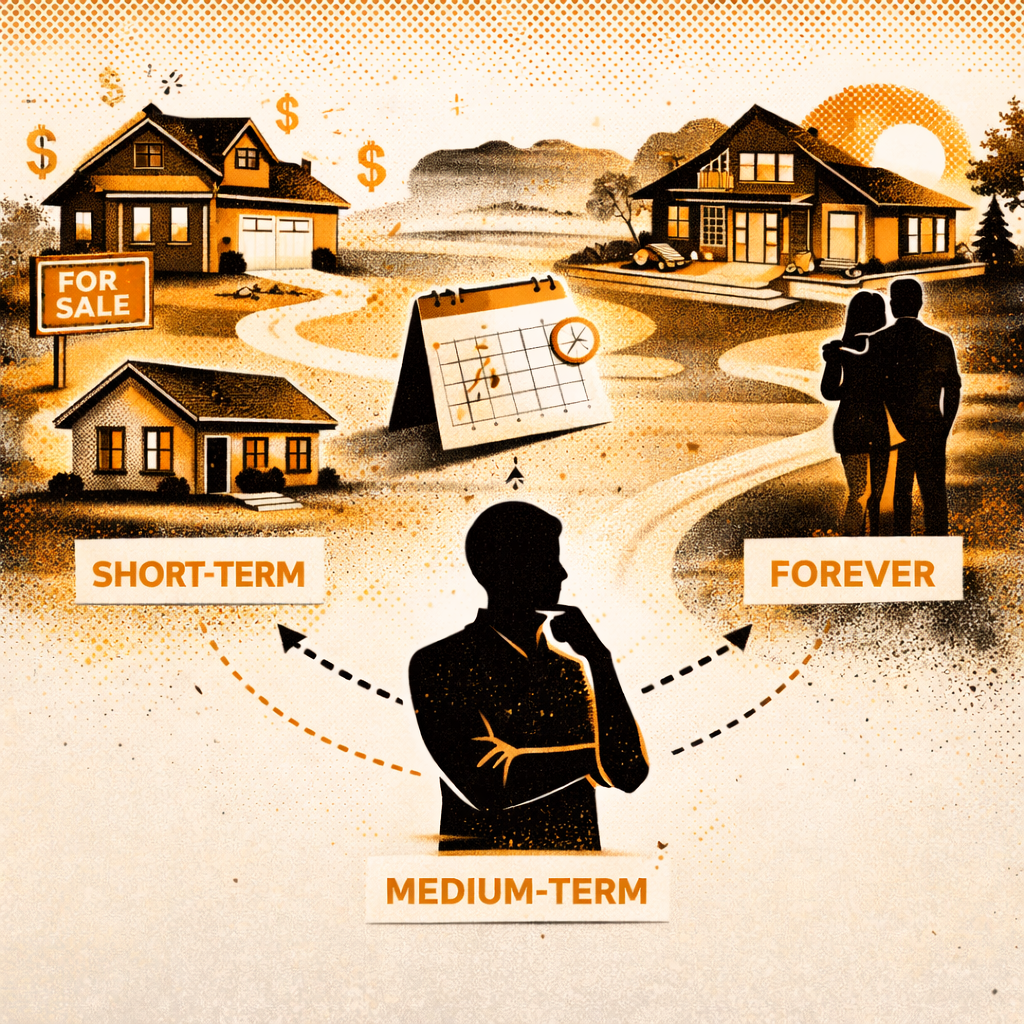
It might seem like an odd question to lead with, especially when most people are excited to jump into talking about their dream kitchen or the addition they're envisioning. But the timeline you're working with fundamentally changes how I approach the design, what I recommend you invest in, and whether certain decisions even make sense.
I think about timelines in three rough categories: short-term (two to four years), medium-term (around a decade), and forever home. Each of these categories requires a completely different mindset when it comes to construction and design work.
The Short-Term Hold: Two to Four Years
If you're planning to sell within two to four years, you need to be extremely concerned with your return on investment. The market won't have enough time to naturally appreciate to the point where you recoup a significant construction investment. You're essentially in developer mode, whether you realize it or not.
In this scenario, you have to be very aware of the comps in your neighborhood. If the average house sells for around six million dollars and maybe there are one or two outliers at seven and a half, and you bought yours for seven and plan on sinking a couple million into it, there's a real chance you won't be able to sell it for nine and a half when you're ready to move. You might get close. You might not.
The shorter your timeline, the more you need to think like a real estate developer. What are the other values in the neighborhood? Are you pricing yourself out? Is there anything about the location that would justify a premium (proximity to top schools, waterfront, downtown access)? These are the questions that matter when you're flipping or doing a quick turnaround.
I've worked with clients who fell in love with a property during the pandemic, bought it at a premium, and then realized they wanted to add to it. The problem was they'd already overpaid relative to the neighborhood, and they were only planning to stay for four or five years. Adding more square footage and sinking more money into the house would have priced them completely out of the market. If they'd known that upfront, they probably wouldn't have bought that particular house, or they would have bought it knowing that an addition wasn't in the cards.
The Medium-Term Hold: Around a Decade
Once you start thinking about keeping a house for ten years or more, the calculus changes. You still want to be mindful of the neighborhood comps, but it becomes less of a focus because the market will naturally appreciate over that time. You'll likely earn your money back, depending on how much you put into construction.
A decade is a long time. If you do the work now and live in a beautiful, functional home for ten years, the odds are good that by the time you're ready to sell, property values in your neighborhood will have caught up to or surpassed what you invested. This is especially true if you're in a desirable area with good schools, convenient amenities, or other factors that keep demand high.
At this timeline, you can start prioritizing quality of life over pure return on investment. You're not ignoring the comps entirely, but you're also not letting them dictate every decision. You have breathing room.
The Forever Home: When ROI Stops Mattering
Then there's the forever home. This is the house you plan to retire in, the house you might pass down to your kids, the house where you'll spend the next 40, 50, 60 years of your life.
If this is your situation and you have the means to do the work you want to do, I'm going to tell you something that might sound financially irresponsible: spend the money. Don't worry about overdeveloping the property relative to the neighborhood. Don't stress about whether you'll get your money back. You're not getting your money back in your lifetime, and that's fine.
Here's the thing. If you're 30 or 40 years old and you plan to live in this house until you're 90, that's 50 or 60 years. Look back 60 years from today and think about what housing prices were then compared to now. Your house is going to appreciate. Your kids or grandkids will benefit from that appreciation. But more importantly, you'll benefit from living in a home that actually works for you, that brings you joy, that supports your daily life.
I can't tell you how many people I've met who bought their forever home and then spent decades saying "we'll renovate the kitchen later" or "we'll redo the bathrooms when we retire." Then they get to retirement and they're tired. They want to travel. They don't want to live through a construction project. And they've spent 30 years looking at the same outdated carpet and cabinets they inherited when they bought the place.
That's not how I think you should approach a forever home. If you're going to be there for the long haul and you have the financial means, do the work now. Do it right. Invest in quality of life, because that's what you're actually buying. You're not buying a return on investment. You're buying 50 years of living in a space that feels like yours.
I've worked with clients who were mathematically minded, people who are used to investing and thinking about returns, and this was a hard pill for them to swallow. They struggled with the idea of putting more money into the house than what comparable homes in the neighborhood were worth. But once we reframed it as an investment in their daily experience rather than a financial asset to be liquidized, it made sense.
When You Can Ignore the Comps
There are really only two situations where I tell clients it's okay to completely ignore what other houses in the neighborhood are worth.
The first is the forever home scenario I just described. If you're keeping the house for 40, 50, 60 years, the comps don't matter. Even if you're keeping it for 20 years, you're still going to make your money back in most cases. The market will catch up.
The second situation is when you're wealthy enough that resale value just isn't a concern. I've worked with clients who buy expensive properties, put a lot of money into them, and genuinely do not care about resale value. They want quality of life. They've worked hard, they have the resources, and they want to live in a place they love. For them, the question isn't "will I get my money back?" The question is "will this make my life better?" And if the answer is yes, they move forward.
For everyone else, though, you need to at least be aware of the comps and how your timeline interacts with them. That doesn't mean you have to make every decision based on resale value, but it does mean you should go into the project with your eyes open.
A Final Thought on Timelines
The other thing I'll say is that timelines can be emotional. You might fall in love with a house and convince yourself you're going to stay there forever, even if deep down you know that's probably not true. Or you might buy a house thinking it's a five year plan, and then life changes and suddenly you're there for 15.
I get that. Life is unpredictable. But doing your best to be honest with yourself about how long you plan to stay, and then making decisions that align with that timeline, will save you a lot of frustration and financial stress down the road.
When I ask you how long you plan to keep the property, I'm not trying to lock you into a commitment. I'm trying to understand how to best serve you. Because the advice I'd give someone flipping a house in three years is completely different from the advice I'd give someone building their retirement home. And if I don't know which one you are, I can't help you make the right decisions.