If I had to pick the one thing that every client underestimates about a construction project, it wouldn't be cost (though they underestimate that too). It would be time.
Everyone, and I mean everyone, severely underestimates how long it takes to design something and then build it. And if you're buying a new property, there's always this rush to get in and get it done so you can finally live in the house you just bought.
I get it. You're excited. You've bought this house. You want to move in. You don't want to keep paying rent or living in a temporary situation. You want to be in your home.
But if you're trying to produce something that's actually good, something that's well-designed and well-built, it takes time. Months. Sometimes more than a year.
And there's no way around that.
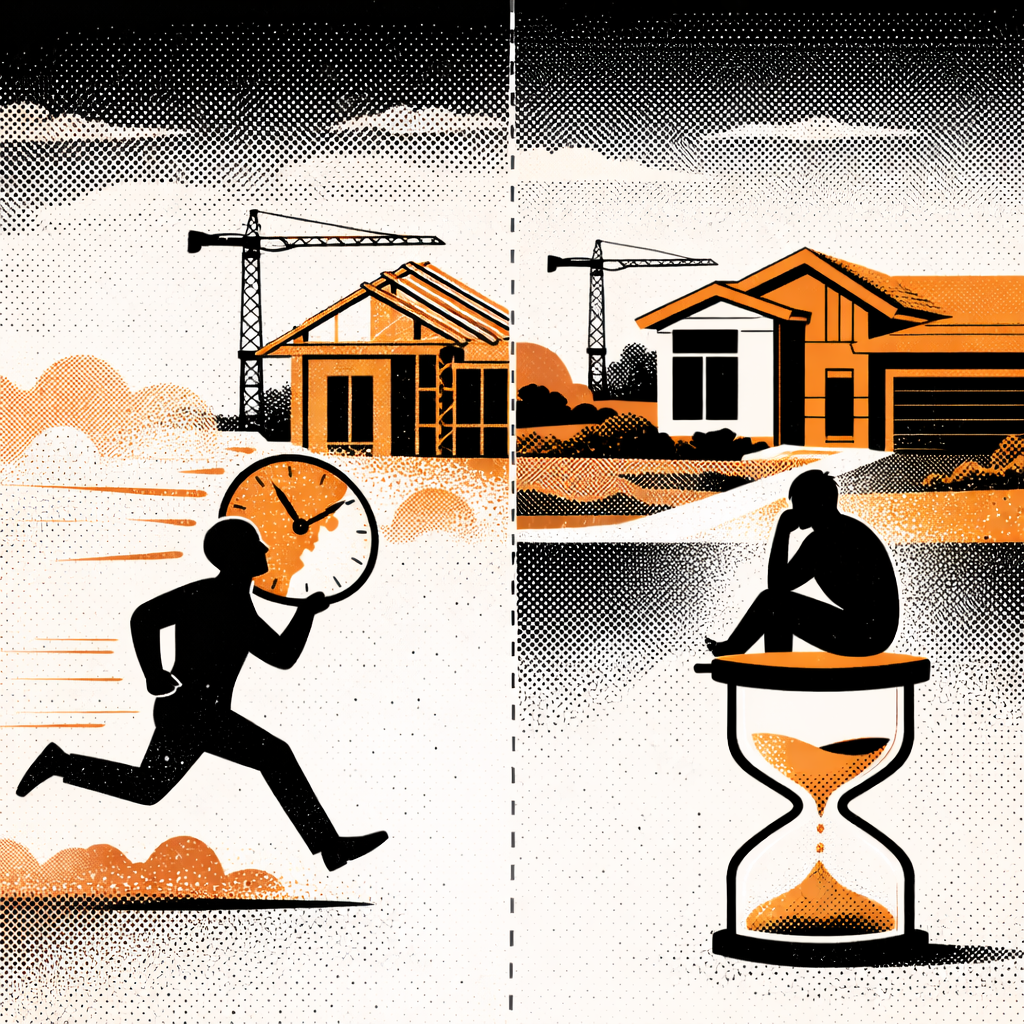
The Design Process Takes Longer Than You Think
Let's walk through what the design process actually looks like so you can understand why it takes as long as it does.
We have several phases: concept design, schematic design, design development, construction documents, and permitting. That's at least five phases before construction even starts.
Let's say we're in the concept design phase and we're going to have three meetings with you. That's pretty typical.
The first meeting, I show you initial concept sketches. We talk about them. You give me feedback. I go back and do more work based on that feedback.
The second meeting, I show you revised concepts. We discuss. Maybe we're close, but there are still some tweaks to make.
The third meeting, we finalize the concept before moving to the next phase.
Three meetings. How long does that take?
Well, for any office that's producing good work, you need about two weeks between meetings to actually do the work, refine the drawings, think through the design problems. Then you show it to the client. The client takes about half a week to a week to really think about it and make decisions.
So that's two and a half weeks per meeting. Times three meetings. That's a month and a half. For one phase.
And here's the thing: each subsequent phase gets longer. Schematic design takes longer than concept design. Design development takes longer than schematic. Construction documents take the longest of all.
So if you add it all up, you're looking at six to nine months, maybe a year, just for design and construction documents. And that's before you even get to permitting.
Permitting Takes Time Too
Once the drawings are done, they have to be submitted for permit review. How long that takes depends on your municipality.
Some towns are fast. Maplewood, where I'm based, is currently turning around permits in about two weeks. That's incredibly fast.
Other towns take longer. South Orange can take up to two months. Some municipalities take even longer than that.
So you have to factor in permitting time on top of design time.
Construction Takes Time Too
And then there's construction itself.
For a straightforward project, maybe a bathroom renovation or a small addition, you're looking at three to four months of construction. Maybe a bit more if there are complications (and there are always complications with older homes).
For a larger project, a full gut remodel or a significant addition, you could be looking at six months to a year of construction.
So if you add it all up, design plus permitting plus construction, you're looking at a minimum of nine months to a year for a relatively straightforward project. For more complex projects, you're looking at a year and a half to two years from start to finish.
Why You Can't Rush It
I know those timelines sound long. And I know there's this temptation to compress them.
Can we break ground in three months? Can we have it done by the end of the year so we can move in?
Here's the reality. The only way to compress the timeline that dramatically is to skip steps. And if you skip steps, you end up with an inferior product.
You can't have three meaningful design meetings in three weeks. There's not enough time to do good work, present it, get feedback, and refine it. If you try to rush that process, you end up with half-baked ideas that don't actually solve your problems.
You also can't skip the permitting process. That's out of your control. The town takes as long as the town takes.
And you can't rush construction without cutting corners. Good construction work takes time. If a contractor tells you they can do in three months what everyone else is quoting at six months, they're either cutting corners or they're lying to you.
So when clients call me and say they want to break ground in three months, I have to pump the brakes. I explain that the only way that happens is if you give me a brief, I do the work with zero input from you, we don't talk at all, I just design and build the thing and you have no say in any decisions.
And obviously, that's not how it works.
The Importance of Contingency Time
Just like you should have a contingency budget for unexpected construction issues, you should have a contingency timeline.
Things go wrong. We open up walls and discover problems that need to be fixed. Materials get delayed. The contractor's key guy gets sick for two weeks. The permit review takes longer than expected.
All of these things add time to the project. And if you've planned your timeline down to the day with no buffer, you're going to be stressed and frustrated when (not if) delays happen.
So build in extra time. Assume things will take longer than the best-case scenario. That way, if the project finishes early, you're pleasantly surprised. And if it takes the full amount of time you budgeted, you're covered.
Don't Set Hard Finish Dates
This might sound unappealing, but I really, really discourage clients from setting hard finish dates.
I know you want to move in by Christmas. I know you want it done before the school year starts. I know you have a vision of hosting Thanksgiving in your new kitchen.
But construction projects take on a life of their own. And trying to force a project to meet an arbitrary deadline usually results in one of two things: either you sacrifice quality to meet the deadline, or you miss the deadline and feel frustrated.
Neither of those outcomes is good.
If this is a property you're planning to keep for 10 or 15 years, why would you sacrifice two weeks or a month of design and construction work for an inferior product? Why rush to meet a deadline if it means you'll be living with compromises for the next decade?
Most clients, when it comes down to it, won't make that trade. When you're in the thick of it and I ask "are you willing to spend an extra $20,000 to get this feature you wanted, or do you want to cut it to stay on budget?" most clients say "I've come this far, I'm going to do it. This is my house for the next 10 years, I want it right."
The same thing happens with schedule. When push comes to shove, clients will almost always choose to take the extra time to do it right rather than rush and compromise.
So don't set yourself up for frustration by committing to an inflexible timeline from the start.
Living Through Construction
One thing that does impact the timeline is whether you're living in the house during construction or not.
If you're living in the house, the contractor has to work around you. They can't start work until you've gotten the kids out the door to school. They have to stop at a reasonable hour so you can have dinner and put the kids to bed. They have to set up dust mitigation barriers. They have to be more careful and more respectful of the fact that this is your home.
All of that takes extra time.
If the house is empty and you're not living there, the contractor can work longer hours and move faster. They don't have to navigate around your daily life.
So living through construction does elongate the timeline. Not dramatically, but it's something to be aware of.
On the flip side, living through construction means you're there to answer questions in real time and make decisions quickly. So there are trade-offs.
A Timeline Summary
Here's a rough timeline for a typical residential project:
Concept design: 1 to 2 months
Schematic design: 1 to 2 months
Design development: 1 to 2 months
Construction documents: 2 to 3 months
Permitting: 2 weeks to 2 months (depending on municipality)
Construction: 3 to 12 months (depending on scope)
Total: 9 months to 2 years, depending on the complexity of the project.
That's the reality. And I know it's longer than you were hoping. But it's what it takes to do good work.
Why It's Worth It
I know this all sounds like a lot. A year. A year and a half. Two years.
But think about it this way. If you're going to live in this house for the next 10 or 15 years, is it really worth rushing the process and ending up with something that doesn't actually solve your problems?
Take the time. Do it right. And then enjoy the results for the next decade.