One of the most common things I hear from new clients is some version of "I talked to my neighbor and they said their kitchen remodel cost X, so I figured mine would cost about the same."
And every time I hear this, I know we're about to have a difficult conversation.
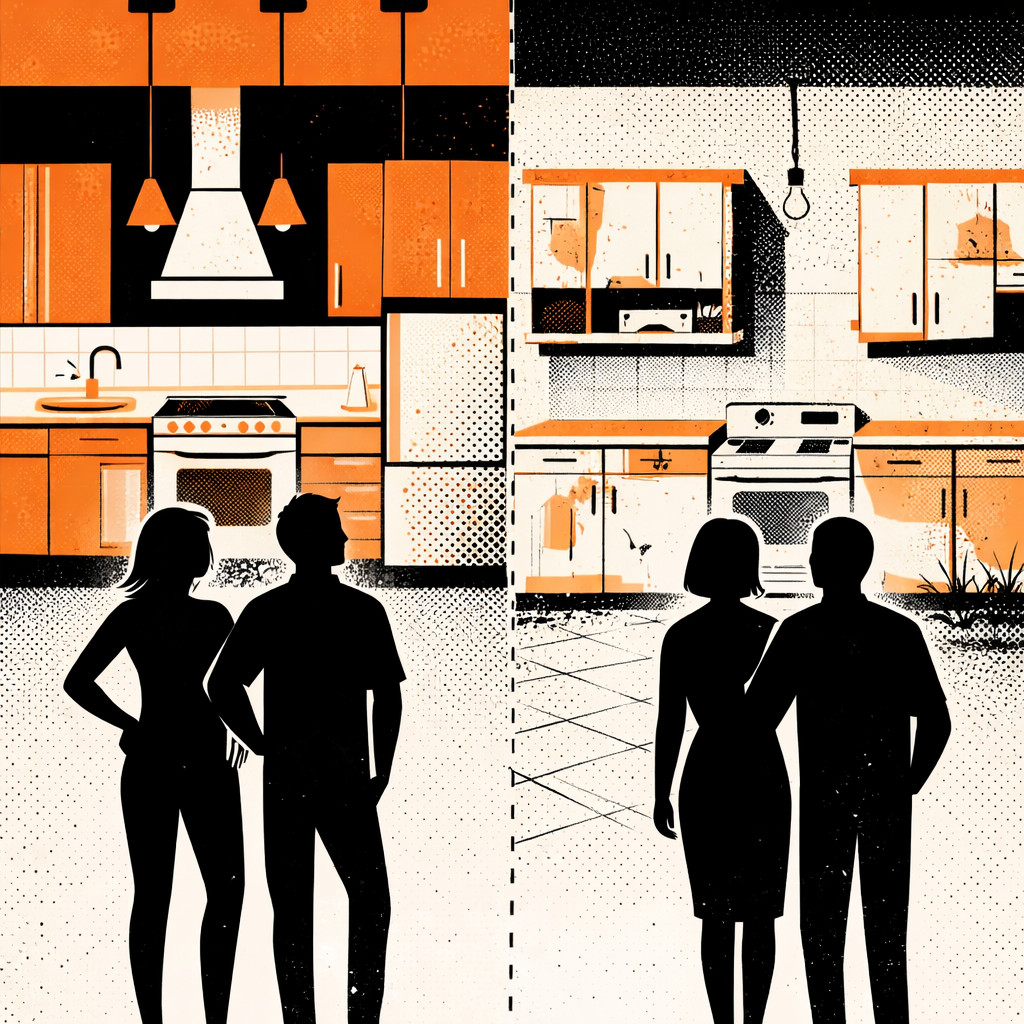
Because here's the thing: your neighbor's construction costs are almost completely irrelevant to yours. And if you're basing your budget expectations on what someone else paid for work that sounds vaguely similar, you're setting yourself up for disappointment.
Let me explain why.
Everyone Underestimates Construction Costs
First, let's just get this out of the way. Everyone, and I mean everyone, underestimates how much construction costs. This isn't just people who are buying their first home. This is also people who are extremely wealthy and have done multiple projects before. Everyone thinks it's going to cost less than it actually does.
So if you're sitting there thinking "surely my project won't cost that much," I'm here to tell you: it probably will.
Your Neighbor's Project Is Not Your Project
When someone tells you their kitchen remodel cost $100,000, what does that actually tell you?
Not much.
You don't know what level of quality they were going for. You don't know what finishes they chose. You don't know if they did all the work at once or phased it over multiple years. You don't know what their scope of work actually included. Did they just replace cabinets and countertops? Did they move walls? Did they upgrade all the plumbing and electrical? Did they hire a design professional or just work directly with a contractor?
And most importantly, you don't know what year they did the work. If they renovated their kitchen four years ago, the costs are completely different now. If they did it pre-pandemic, the costs are wildly different.
So when you hear a number from a friend, neighbor, or cousin, take it with a massive grain of salt. It's not that they're lying to you. It's that the information is incomplete and probably outdated.
The Contractor/Architect Quality Spectrum
Here's the other thing people don't realize. If you throw a net out and catch 100 contractors, they're all going to be different. Same with architects. Same with interior designers.
They practice differently. They charge differently. And the level of quality they deliver is extremely different.
I know this before someone even tells me the number. A client will say "my neighbor hired a contractor and they were great, they did a kitchen remodel and an addition," and I already know it's going to be super cheap and poor quality work. I can tell from the way they're talking about it.
And sure enough, when I see the work or hear the price, it's exactly what I expected. Shockingly low cost, and shockingly low quality.
Here's the hard truth: if you hire a contractor or architect who's drastically cheaper than everyone else, you're not getting a deal. You're getting inferior work. And that inferior work is actually going to take value out of your house, not add value. That kitchen will need to be redone in 15 years because it's falling apart.
So when you're comparing costs, you have to compare apples to apples. And that means understanding what level of quality you're actually trying to achieve.
The Car Analogy
I like to use cars as an analogy when talking about construction quality and cost.
Are you trying to build a Honda? A Lexus? An Audi? A Porsche? A Ferrari? A Pagani?
Each of those represents a different tier of quality, and they come with very different price tags.
Now, everyone says they want a Lamborghini for the price of a Honda. But that's not how it works. You can't buy a Lambo for a Honda price, and you can't get Porsche-level construction work for entry-level pricing.
The key is to be honest with yourself about what tier you're actually going for. And if this is a development property or you're only planning to live there for three years, maybe you don't need a Porsche. Maybe a Subaru is fine.
But if this is your forever home and you want something really special, you need to be realistic about what that costs.
How to Get Real Numbers
So if you can't rely on your neighbor's anecdotal pricing, how do you actually figure out what construction is going to cost?
The best way is to talk to local professionals. Architects and contractors who work in your area and understand the market.
Now, here's the tricky part. A lot of contractors won't want to give you any numbers until you show them drawings and plans. And I get it. Contractors get burned all the time by giving rough estimates that the client then treats as a binding quote.
The contractor will say "this is just a rough ballpark, I have no idea what you're actually doing, this is not a firm number," and the client will hear "this is how much my project will cost."
Then later, when the real number comes in higher, the client says "but you told me it would cost this much," and the contractor is frustrated because they explicitly said it was just an estimate.
So contractors have learned to just not give numbers early on. I understand why.
But I also think it's to everyone's benefit to have some sense of what things cost. So here's how you get around it.
Don't ask a contractor how much your specific project will cost. Instead, ask them if they've done similar work in the region. Have you done an addition that was about 600 square feet? How much did that cost?
They'll tell you. And now you have a comp. A real comp, based on actual completed work in your area.
If you talk to three contractors, now you have a range. And that range is much more useful than whatever your neighbor told you about their project from four years ago.
Cost Per Square Foot vs. Room-Specific Pricing
One quick note on how costs are typically discussed.
For larger scale work like full gut remodels, additions, or ground-up new construction, we usually talk about cost per square foot. That's the common metric.
But if you're doing more discrete work, like one kitchen and two bathrooms, we typically don't talk about cost per square foot. We talk about total cost per room. A kitchen costs this much. A bathroom costs this much.
So if you're getting quotes, make sure you understand which metric is being used and whether it's apples to apples with other quotes you're comparing.
Regional Differences (But Not As Much As You Think)
People often assume that construction costs are dramatically cheaper in certain parts of the country. And there are some regional differences, sure. Some places in the South might be cheaper.
But in my experience working in multiple states, the differences aren't as dramatic as people think. Maybe 10 to 15 percent, which is meaningful, but it's not 50 percent off.
So don't assume that because you're not in California or New York, your project is going to be drastically cheaper. Things are expensive everywhere.
Why Your Real Estate Agent Shouldn't Be Your Source
I've said this before and I'll say it again: do not rely on your real estate agent for construction cost estimates.
Real estate agents see a lot of houses, but they're not part of the construction process. They have no idea how people actually get from point A to point B. They don't understand permitting, zoning, design, or construction sequencing.
They might have a general sense of very basic things, like "you could remove this wall to connect the kitchen and dining room." But anything beyond that, they're guessing.
And here's the other problem. Real estate agents are incentivized to close the deal. Once the commission is earned, they're done. Now, the good ones don't operate that way. The good ones want to maintain long-term relationships with their clients and will stick around to help however they can.
But even the good ones aren't trained in construction. So use your agent for what they're good at (understanding the market, finding properties, negotiating deals), but don't use them for construction advice.
What You Should Budget
I can't give you a universal number because every project is different. But here's what I can tell you.
If you're doing a significant renovation, a full kitchen, a couple bathrooms, maybe some other work, you're probably looking at a minimum of $100,000. More likely $200,000 to $400,000, depending on the scope and quality level.
If you're doing an addition, you're looking at even more.
If you're doing a full gut remodel or ground-up new construction, you're looking at several hundred thousand to well over a million, depending on size and finishes.
These are rough numbers, and they'll vary based on where you are and what you're trying to achieve. But they're a starting point.
And if those numbers sound high to you, I understand. But they're realistic. And it's better to know now than to find out halfway through the process that you can't afford to finish what you started.
A Final Thought
I know construction costs can feel overwhelming. But here's the thing. If this is a house you're going to live in for a long time, the money you invest isn't just about resale value. It's about your daily experience. It's about living in a space that actually works for you.
And that's worth something. Maybe not an infinite amount, but it's worth more than zero.
So talk to professionals. Get real numbers. Be honest with yourself about what you're trying to achieve. And then make an informed decision about what makes sense for you and your family.