When you're buying a property with the intention of doing construction work, you're going to get a lot of advice. Some of it will be helpful. A lot of it won't be.
The key is knowing who to listen to and who to politely ignore.
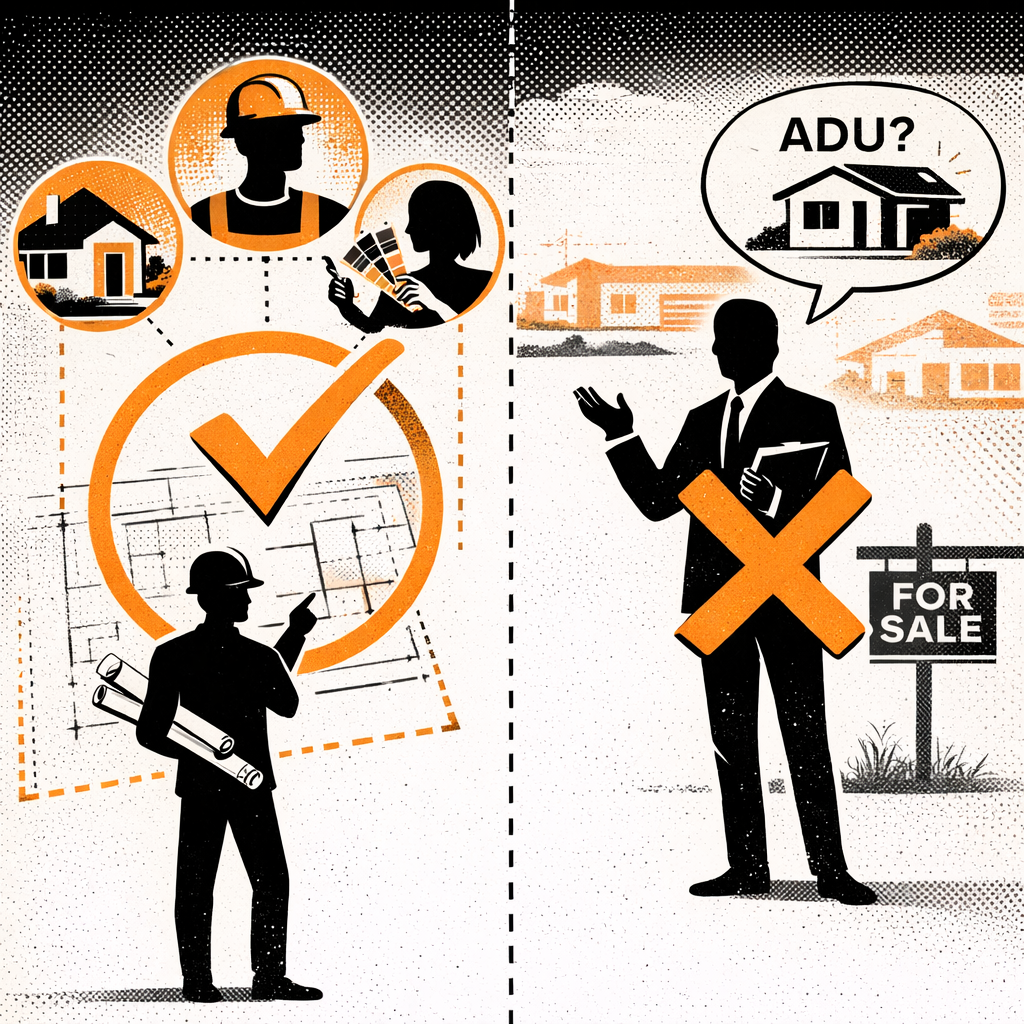
Architects: What We Assess and When to Hire Us
Let's start with architects, since that's what I am.
An architect is the person you hire to design the work and guide the project from concept through construction. We're trained to think about space, flow, proportion, light, and how all of those things come together to create a functional and beautiful environment.
We're also trained to understand building codes, zoning regulations, structural systems, and how to coordinate all the different trades (plumbers, electricians, HVAC, etc.) so that everything works together.
When you hire an architect early in the process, before you've even bought a property, we can help you assess whether a property is a good candidate for what you're trying to achieve.
I'll walk through the house and evaluate things like:
Does the floor plan make sense, or would it require major structural changes to fix?
Are the proportions of the rooms good, or are they awkwardly sized?
Is there good access to natural light, or is the house dark and closed off?
What's the condition of the windows and doors? (Because replacing them is expensive.)
Is there adequate storage, or would we need to add closets or a garage?
What's the flow of the house? Does it make sense for how you live, or would we need to reconfigure everything?
These are the kinds of things an architect is trained to see. And we can give you a realistic sense of what it would take to turn the property into what you're envisioning.
Contractors: How to Get Useful Estimates
Contractors are the people who actually build the work. And they're an essential part of the process.
But here's the thing: contractors are not designers. They're builders. So while they can give you a sense of what things cost and how long they take to build, they're not the right people to ask for design advice.
That said, contractors are very useful for understanding construction costs and feasibility from a building standpoint.
If you're trying to vet a property and you want to know roughly how much it would cost to renovate, you can reach out to a few local contractors and ask them for comps.
Don't ask them how much your specific project will cost, because they won't be able to give you a meaningful answer without drawings. But you can ask them: have you done a kitchen renovation recently? How much did that cost? Have you done an addition that was about this size? What was the price range for that?
They'll give you ballpark numbers. And if you talk to three contractors, you'll start to get a sense of the range.
Just remember: those numbers are only as good as the information the contractor has. If they're walking through a property with you and giving you a rough estimate on the spot, they're working with very limited information. So take those numbers as a starting point, not a firm quote.
Interior Designers: When They're Helpful (And When They're Not)
Interior designers are great for helping you select finishes, furniture, and fixtures. They're experts in color, texture, materials, and how to create a cohesive aesthetic.
But when it comes to vetting a property for construction feasibility, they're not the right people to consult.
Most interior design work is about loose items (furniture, rugs, lighting, accessories) or finish selections (paint colors, tile, countertops). Those are important decisions, but they don't tell you whether a property is structurally sound or whether the zoning allows you to build what you want.
So hire an interior designer for what they're good at, but don't rely on them for construction feasibility assessments.
Real Estate Agents: What They're Good For (And What They're Not)
Okay. This is the big one.
I'm going to be blunt: do not rely on your real estate agent for construction advice.
I know. I know. Your agent is friendly and helpful and has been guiding you through the buying process. And maybe they've even said things like "oh, you could easily add an addition here" or "you could knock down this wall and open up the space."
But here's the reality: most real estate agents know almost nothing about construction costs, construction feasibility, design, permitting, or zoning.
They see a lot of houses. That's true. But they're not part of the construction process. They have no idea how projects actually get designed and built. They don't understand structural systems. They don't understand building codes. And they certainly don't understand zoning regulations.
So when an agent tells you "you could put an ADU here," they're guessing. And I can't tell you how many times I've shown up to a site and had to tell a client "I don't know who told you that, but no, you can't do that."
Now, to be fair, there are some good real estate agents out there who understand their limits and will tell you "I don't know, you should talk to an architect or contractor about that." Those are the good ones.
But a lot of agents will just make things up. And the reason they do that is because they're trying to close the deal. Once the commission is earned, they're done. They don't have to live with the consequences of the bad advice they gave you.
So use your real estate agent for what they're actually good at: understanding the market, finding properties, negotiating deals, and connecting you with other professionals.
But do not use them for construction advice. And definitely don't use them to estimate costs or tell you what's feasible.
The Problem with Agents Inflating Their Expertise
Here's something else that happens that really frustrates me.
An agent doesn't know the answer to a construction question, so they call up a contractor or architect they know and ask them. The professional gives them an answer. The agent then relays that information to the client without telling them "I had to ask someone else to figure this out."
So now the agent looks like they know what they're talking about, when in reality they're just leveraging someone else's expertise without giving them credit.
And the client has no idea that the information came from a third party. They think the agent just knows this stuff.
This inflates the agent's perceived expertise and makes clients think they can rely on them for technical advice. Which they can't.
So if your agent is giving you very specific construction advice, ask them where that information is coming from. Did they talk to a contractor? An architect? A structural engineer? Or are they just guessing?
What Real Estate Agents Are Actually Good For
To be clear, I'm not saying real estate agents are useless. They're very good at certain things.
They understand the market. They can tell you what properties are selling for in a given neighborhood. They can help you understand comps and whether a property is priced fairly.
They can also connect you with other professionals. A good agent has a network of contractors, architects, inspectors, and other people you might need.
So use them for that. But don't use them as a substitute for actual construction professionals.
Who You Should Actually Talk To
So here's the summary.
If you're buying a property and you're planning to do construction work, here's who you should talk to:
An architect or designer to assess the design feasibility and help you understand what's possible
A contractor to get a sense of construction costs and timelines
A structural engineer (if the project is complex or involves structural changes)
A zoning consultant or architect who can do a feasibility review to understand what the regulations allow
Your real estate agent for market knowledge and deal negotiation
Do not rely on your agent for anything related to construction. And do not rely on anecdotal information from neighbors or friends about what their projects cost.
Get real information from real professionals. It's the only way to make an informed decision.