If you're buying a property with the intention of doing any kind of construction work, whether that's an addition, a detached ADU, or even just a deck, there's one thing you absolutely need to know before you close: what does the zoning actually allow?
And here's the hard truth. It takes time and money to figure that out.
But it's worth it. Because if the zoning doesn't allow you to do what you're envisioning, nothing else matters. The project is dead. Full stop.
What Is Zoning, and Why Does It Matter?
Zoning regulations are the rules set by your municipality that govern what you can and can't build on your property.
They dictate things like:
Setbacks (how close you can build to the property lines)
Lot coverage (how much of your lot can be covered by buildings)
Height limits (how tall your structure can be)
Floor area ratio, or FAR (the ratio of total building square footage to lot size)
Use restrictions (whether you can build an ADU, run a business, etc.)
If you want to add square footage to your property, whether through an addition, a second story, or a detached structure, you have to comply with these regulations. And depending on where you are, those regulations might be very restrictive.
How Much of Your Property Can You Actually Develop?
One of the first questions I ask when doing a feasibility study is: how much of this property is already developed, and how much room is left?
Let's say you buy a property and you're thinking about adding an addition. You assume there's plenty of room because you have a big backyard.
But then I look at the zoning and realize that you're already maxed out on lot coverage. Or the setback requirements mean you can't build where you were planning to. Or the height limit means you can't add a second story.
Suddenly, what seemed like a straightforward project becomes much more complicated. Or impossible.
This is why I always recommend doing a feasibility study before you buy a property if you know you're going to want to do significant work.
What a Feasibility Study Looks Like
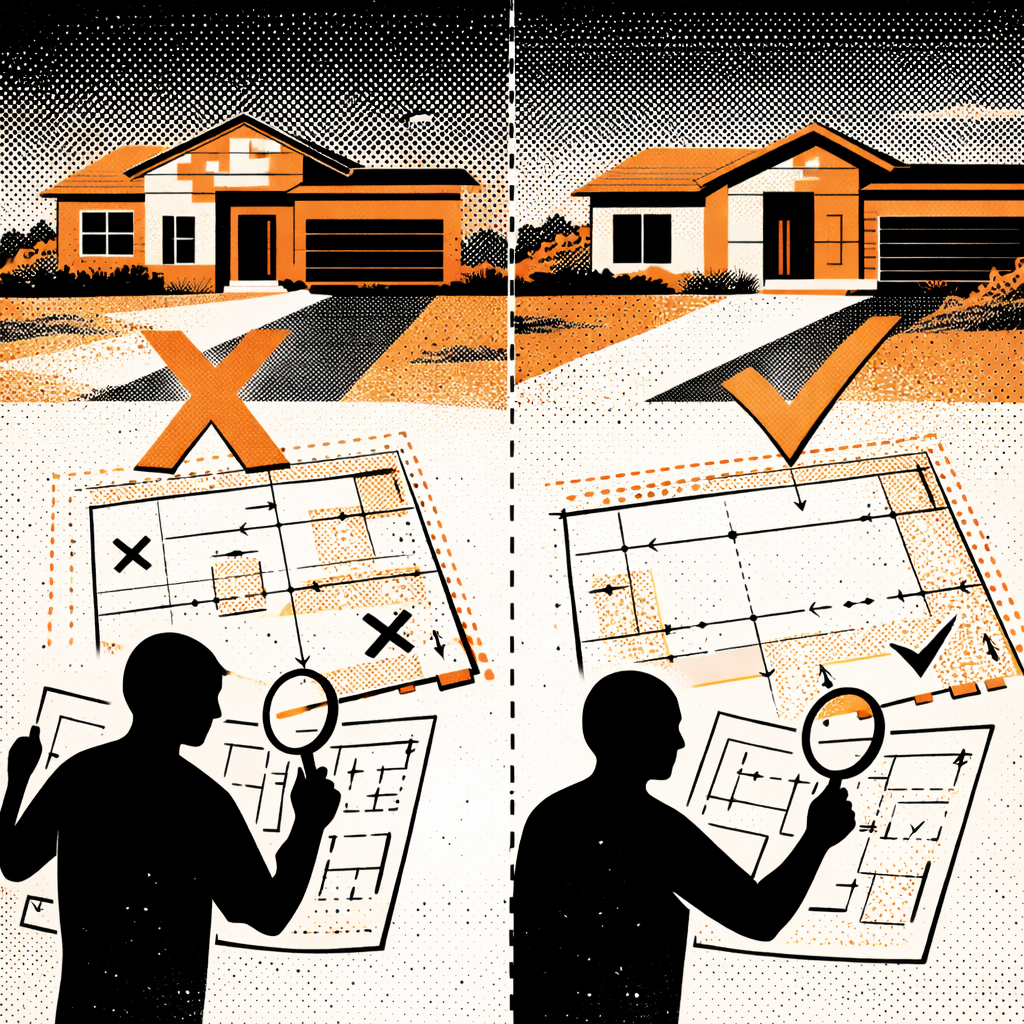
A feasibility study is exactly what it sounds like. I take your property survey, overlay the zoning regulations on top of it, and figure out what's actually possible.
I look at your existing conditions. I calculate how much lot coverage you're using. I measure your setbacks. I figure out how much additional square footage you could add, if any, and where on the property it could go.
Sometimes the results are great. You have plenty of room to work with, and we can move forward with confidence.
Other times, the results are not so great. Maybe you can only add 300 square feet instead of the 1,000 you were hoping for. Or maybe you can't add anything at all without getting a variance, which is a whole separate process that may or may not be successful.
Either way, you need to know. And you need to know before you buy the property, not after.
How Much Does a Feasibility Study Cost?
This is where people get nervous. Because a feasibility study costs money, and you're spending that money before you even know if the project is viable.
For a straightforward residential property, a feasibility study typically costs between $1,200 and $3,000. For more complex properties (hillside lots, properties with unusual constraints, properties in municipalities with complicated zoning codes), it can cost more. Sometimes up to $10,000 for really high-end, complicated situations.
I know that sounds like a lot. But think about it this way: would you rather spend $1,200 to find out a project isn't viable, or would you rather buy the property, spend $50,000 on design work, and then find out you can't actually build what you wanted?
The feasibility study is an insurance policy. It's a small upfront investment that can save you from a much larger mistake.
When You Should Do a Feasibility Study
You should do a feasibility study if:
You're planning to do an addition
You're planning to build a detached ADU or guest house
You're planning to add a second story
You're planning to do significant site work (like adding a large deck or patio that might impact lot coverage)
You're buying a property in a municipality with restrictive zoning
You're buying a hillside property or a property with unusual topography
You're buying a property and you're not sure if your vision is actually possible
Basically, if there's any doubt about whether the zoning will allow what you want to do, get a feasibility study.
What If You've Already Bought the Property?
If you've already bought the property and you're now realizing you need to understand the zoning, it's not too late. You can still do a feasibility study.
It's just better to do it before you buy, because if the results aren't what you were hoping for, you still have the option to walk away from the deal.
Structural Considerations: It's Not Just About Zoning
Zoning is the number one constraint that can kill a project. But it's not the only thing you need to think about.
You also need to consider the structural limitations of the existing building.
Let's say the zoning allows you to add a second story. Great. But can the existing structure actually support a second story?
In a lot of cases, especially with older homes, the answer is no. The foundations and framing weren't designed to carry the additional load. So you'd have to do significant structural upgrades, which costs money.
Or let's say you want to remove a wall to open up the kitchen and dining room. Is that wall structural? If it is, you can still remove it, but you'll need to add a beam and possibly columns to carry the load. That's more expensive than just removing a partition wall.
These are the kinds of things a structural engineer can assess. And for more complex projects, it's worth bringing in a structural engineer early on to understand what's feasible from a structural standpoint.
Mechanical Systems in Older Homes
Another thing to consider, especially if you're buying an older home, is the condition of the mechanical systems.
A lot of mid-century homes, for example, have HVAC systems that are completely outdated. In some cases, the ductwork is embedded in the slab, which means if you want to upgrade the system, you have to rip up the floors.
Or you have cast iron plumbing that's deteriorating and needs to be replaced.
Or you have knob-and-tube electrical wiring that's a fire hazard.
All of these things cost money to fix. And they can add significant cost to a renovation project, especially if you're already maxing out your budget on the design and finishes.
So when you're evaluating a property, it's worth understanding not just what the zoning allows, but also what condition the existing systems are in and how much it might cost to bring them up to code or replace them entirely.
Hillside Properties and Other Special Cases
If you're buying a hillside property, there are additional complications.
Technically, you might have a large lot with plenty of room for development based on the lot coverage calculations. But because you're on a hillside, there are all these other restrictions that kick in. Grading restrictions. Slope stability requirements. Environmental review.
All of that adds complexity and cost. And in some cases, it makes development functionally impossible even if the zoning technically allows it.
The same is true for properties with wetlands, properties in flood zones, properties with historical designations, or properties in conservation districts. All of these things add layers of regulation that can limit what you're able to do.
So if you're buying a property with any kind of unusual characteristic, it's especially important to do your homework upfront.
My Feasibility Review Service
This is something I offer as a standalone service. It's $1,200 (Spring/Summer 2026 rate) for a straightforward residential property in New Jersey.
I take your survey, review the municipal zoning code, measure your existing conditions, and give you a clear answer about what's possible.
If you're thinking about buying a property and you want to understand what you can do with it before you commit, reach out. It's a small investment that can save you from a very expensive mistake.