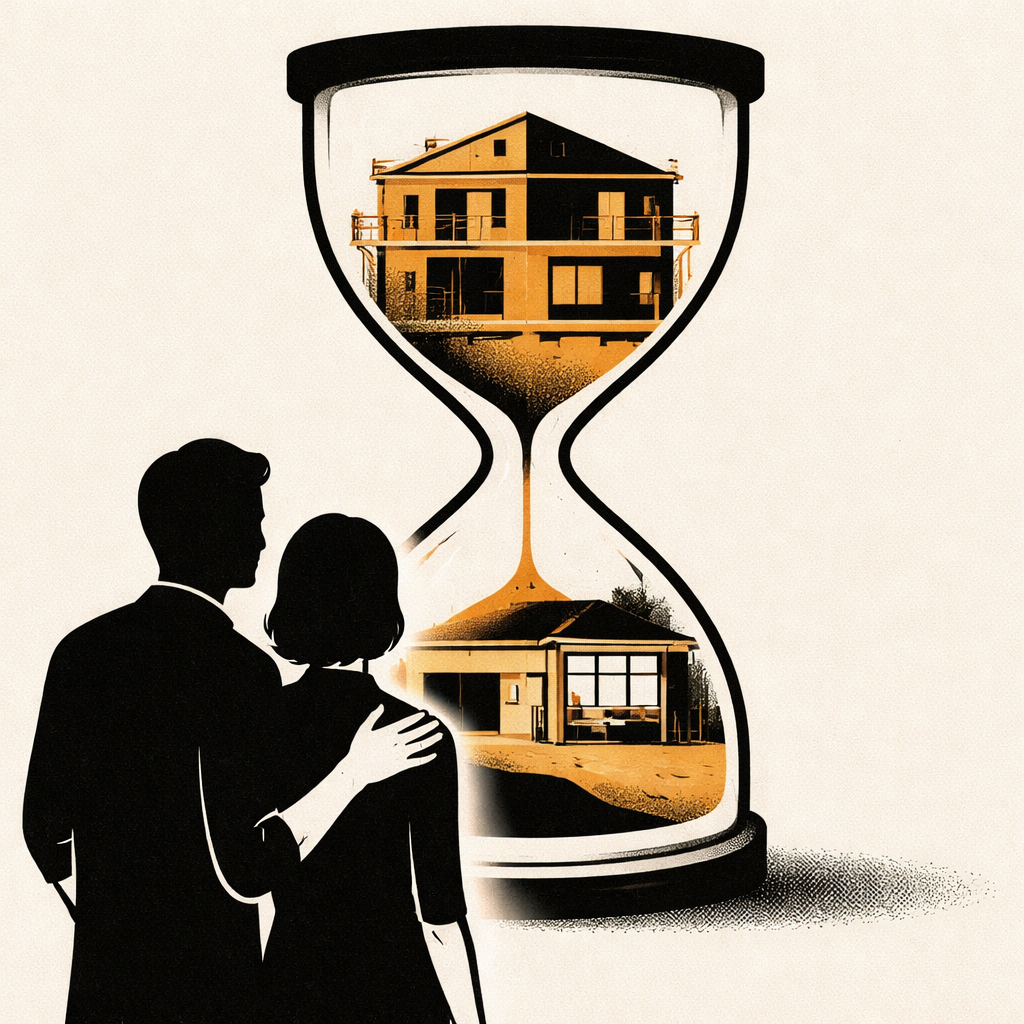
When people ask whether it’s worth renovating their house, they usually start with the wrong questions.
They ask about cost.
They ask about timelines.
They ask about return on investment.
Those things matter, but they’re not the deciding factor.
The real question is this:
How long do you plan on living in the house after the renovation is complete?
Why “Return on Investment” Is the Wrong First Question
I get asked about ROI all the time. It’s a fair question, but it’s often misplaced.
If you’re planning to stay in your home five years or less, a major renovation is usually not worth it unless the house is in very poor condition. Renovations require a significant investment of time, energy, decision-making, and emotional bandwidth. That process alone can take a year or more, which eats into the short window you’d actually have to enjoy the finished home.
In today’s housing market, demand is strong. In many cases, selling and moving is the simpler, less draining option if your time horizon is short.
In that scenario, my advice is often to live with the house as-is, make only essential repairs, and revisit the question later.
When Renovating Is Worth It
If, on the other hand, you plan to stay in your home ten years, twenty years, or for the foreseeable future, renovation is absolutely worth considering.
At that point, return on investment becomes far less important than return on life.
A renovation that’s thoughtfully designed around how you actually live can dramatically improve your day-to-day experience:
• how you move through the house
• how you host family and friends
• how you spend quiet time together
• how the home supports you as life changes
A home that’s tailored to your lifestyle, values, and aesthetics is deeply satisfying in ways that don’t show up on a spreadsheet.
It’s Not Just About More Space
Renovation doesn’t always mean adding square footage.
In many cases, the biggest improvements come from:
• fixing an outdated or inefficient kitchen
• improving a poor layout within the existing footprint
• replacing drafty, inefficient windows
• resolving circulation and storage issues
• making the home feel calmer and more intuitive
If your family is growing, or your kids are getting older and need different kinds of space, renovation can help you adapt without uprooting your life.
Just as importantly, good renovation design anticipates the future.
Designing for the Future You
If you know you’ll be in your home long-term, it makes sense to design spaces that can evolve over time.
That might include:
• flexible rooms that can change use as kids grow and leave
• first-floor bedrooms or bathrooms for aging in place
• wider doorways and better circulation
• thoughtful bathroom layouts
It also includes invisible but critical details, like blocking in walls (blocking is reinforcement behind the wall that allows things like grab bars to be securely installed later without opening the wall). You may not need it now, but adding it during a renovation costs very little and can make a huge difference down the line.
That kind of foresight is what makes a renovation truly worthwhile.
The Bottom Line
If you’re renovating for a quick flip or a short stay, it’s often not worth the effort.
But if you’re renovating to create a home that supports your life for years to come, the value goes far beyond resale. You’re not just upgrading a house. You’re shaping how you live, now and in the future.
And when done thoughtfully, that is absolutely worth it.